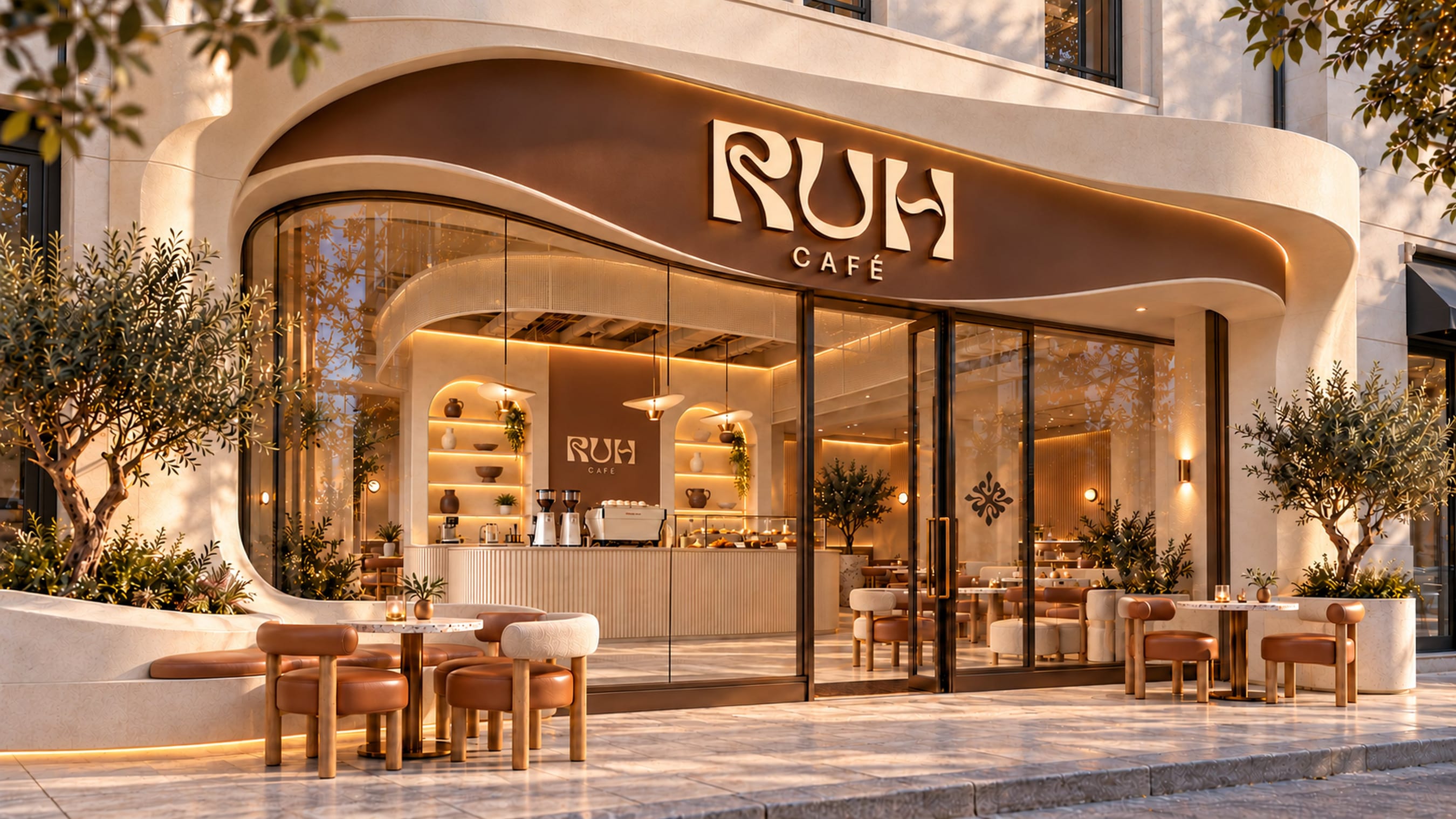
Why Is Your Restaurant Not Getting Customers? 7 Branding Problems That Could Be Costing You Footfall
Most restaurants that struggle to get customers don’t have a food problem. They have a choice problem. A stranger can’t tell what the place is, who it’s for, or why it beats the one two doors down. That’s a restaurant branding problem, and it’s fixable.
Seven things usually sit behind it: a restaurant that’s hard to notice, a storefront that says nothing, positioning any rival could claim, a menu that makes deciding harder, an Instagram page that earns likes but not visits, a look that changes at every touchpoint, and a branding gap being treated with a marketing budget.
One caveat first. Branding isn’t the only thing that fills tables. Location, pricing, service speed, hygiene and delivery-app margins all matter, and no identity fixes a slow kitchen. This post covers the part that gets missed: what a customer sees and understands before they taste anything.
Why isn’t good food enough to get customers?
Because customers choose before they taste. For a first-time diner, the food is the one thing they can’t judge yet. They judge the signboard, the photos on the delivery app, the Google Maps listing, the menu and the Instagram page, usually in a few seconds and usually while comparing you with other places.
That’s how a restaurant with excellent food and a forgettable brand sits quiet while a decent one with a clear brand is full. The food earns the second visit. The brand earns the first.
Branding for restaurants is the system that makes you easy to recognise, easy to understand and easy to choose: your positioning, identity, voice and how consistently they show up. It’s more than a logo, a point we take up in our post on logo versus brand identity.
Problem 1: Is your restaurant hard to notice or find?
If people walk past you, scroll past you or can’t find you on a map, good cooking doesn’t get a chance. Check three places: the street, the map and the app.
On the street, stand across the road for three seconds. Can you read the name and tell what’s sold? Signboards that make sense on a designer’s screen often fail at 20 metres from a moving scooter. On the map, the name on Google Maps, the name on the board and the name on Instagram should match. If the board says “Zaika” and the listing says “Zaika Family Restaurant & Banquets”, you’re making people work to confirm they’ve found the right place. In the app, shrink your delivery listing to thumbnail size. Does the dish still read? Does the name?
Problem 2: Does your storefront say what makes you different?
A storefront has about as long as a red light to answer three questions: what is this, what’s it like, and is it for me? Most answer only the first.
Picture a South Indian breakfast place with a clean white-and-wood front, pendant lights and a chalkboard. It looks good. It also looks like a coffee chain, a bakery and a salad bar. The family wanting a proper filter coffee and ghee podi idli walks past, because nothing told them they’d found it. (An illustration, not a client.)
Fix the answer, not the decoration. One line on the fascia that says what you’re known for. A window that shows the thing you do best. A price signal that matches the room.
Problem 3: Is your restaurant’s positioning too generic?
Positioning is the one-sentence answer to “why you?” For many restaurants that answer is “multi-cuisine, family-friendly, quality food, great ambience.” Every restaurant in the lane could say the same, and most do.
Test it. Cover your name on your menu, website or Instagram bio and read what’s left. If a competitor could publish it unchanged, you don’t have positioning yet. You have a category description.
Generic positioning usually comes from trying to keep everyone: families, the college crowd, office lunch and date night, in one room at one price. A position needs a decision about who it’s for, which occasion, and what you’re known for. “Where the office team goes for a proper thali in a 45-minute lunch break” is narrower than “family restaurant” and far easier to remember. You can still serve everyone else. You just stop asking to be everyone’s answer.
Problem 5: Why isn’t your Instagram turning into visits?
Because a feed can be good content and a weak brand. Likes tell you a post pleased someone. They don’t tell you whether that person knows where you are, what it costs or when to come.
Look at your profile the way a new follower does. Does the bio say in one line what you are and where? Can they see the place, not only the plate? Is there a visible reason to come this week? If the grid is forty well-lit dish photos with no names, no location and no point of view, it’s a gallery. A gallery is pleasant to browse and gives nobody a next step.
Then there’s sameness: the overhead food shot, the warm filter, the “made with love” caption. If your page could be swapped with five others in your area and nobody would notice, a follower has no reason to remember yours. Reach brings people in. The brand decides whether they remember which restaurant it was.
Problem 6: Is inconsistent branding weakening recognition?
Yes. Recognition is built by repetition, and repetition needs a consistent system. When the signboard is a red serif, the menu is teal sans-serif, the Instagram is pastel, the delivery boxes are plain brown and the uniform is something else again, a customer meets five restaurants.
Each piece was probably made carefully, at a different time, by a different vendor: the signboard maker, the menu printer, a freelancer for Instagram, a packaging supplier. Nobody owned the whole.
Consistency doesn’t mean every touchpoint looks identical. It means the same idea, colours, typefaces, voice and finish show up everywhere, adjusted for each format. That’s what a brand identity system is for, and it’s why a logo alone doesn’t solve this. Our post on logo versus brand identity explains why.
Problem 7: Are you using a marketing budget to fix a branding problem?
Often, yes. Ads buy attention. They can’t decide what the attention does next. If a stranger clicks your offer, lands on a page that looks like every other restaurant and sees a menu with no point of view, you’ve paid to show them the problem.
Boosting posts for a restaurant nobody can describe in a sentence buys more people who can’t describe it. That’s the moment to stop adding spend and ask what happens after the click, the scroll or the walk-past. Sometimes the answer is that you do need more reach. More often the leak is further down.
How do you audit your restaurant’s customer journey?
Walk through six stages as a stranger and write down where you’d drop off. A branding gap sits wherever the customer’s question goes unanswered. Use a friend’s phone, not yours, so your search history doesn’t flatter you.
| Stage | The customer’s question | Check this | Gap to look for |
|---|---|---|---|
| Find | Is this the right place? | Google Maps name and photos, signboard, delivery listing | Names or looks that don’t match across them |
| Notice | Does anything stop me? | Fascia, window, app thumbnail at small size | Nothing readable in three seconds |
| Understand | What is it, and is it for me? | Instagram bio, signboard line, first page of the menu | A category description with no point of view |
| Decide | Why here, and why this dish? | Menu hierarchy, signature dishes, price signals | Too many items and no obvious choice |
| Visit or order | Does it match what I saw? | Interior, packaging, staff, tone of service | The online promise and the room don’t agree |
| Remember | Would I recognise it tomorrow? | Colours, typeface, voice, packaging | It looks like the neighbours |
Then ask five people who’ve visited once: how did you find us, what did you expect, and how would you describe us to a friend? If you get five different descriptions, that’s your finding. Their words are also free positioning research.
When does a restaurant need better marketing, and when does it need better branding?
Marketing gets people to the door. Branding gets them through it. Match the fix to the symptom.
| What you’re seeing | Likely cause | Start with |
|---|---|---|
| Few people know the place exists | Awareness | Marketing: local reach, listings, partnerships |
| People visit your page or profile but don’t order or walk in | Clarity or trust | Branding: positioning, storefront, identity |
| People order once and don’t return | Experience or product | Operations first, then recall |
| Rivals with weaker food get more orders | Recognition | Branding: distinctiveness and consistency |
Most restaurants end up needing both, and the order matters. Spend on marketing before the brand is clear and you pay to show it to more people. Fix the brand first and every rupee of marketing has something to build on. Neither comes with a guaranteed lift in footfall. Results depend on location, pricing, food, service and how consistently the work is carried out.
How can a restaurant branding agency help?
A restaurant branding agency does the work this post describes. It finds what you can own, turns it into an identity, and rolls it out across every touchpoint so it holds when a vendor, not a designer, is producing the signboard. At Grit Fox, restaurant and wider hospitality branding run as one connected system: brand strategy, identity design, verbal identity, and packaging and rollout.
In practice you get a position you can say in a sentence, a visual identity built to be recognised, a voice for menus and captions, and guidelines so the third outlet looks like the first.
Restaurant branding companies vary a lot, so here is what to look for:
- They ask about your customers and competitors before they show colours.
- Their work shows systems across signage, menus, packaging and social, not only logos.
- They understand how restaurants run: print vendors, fit-out timelines, delivery-app limits.
- They plan the rollout and hand over guidelines, not just a logo file.
- They don’t promise sales. Be wary of anyone who guarantees footfall.
If two or three of the seven problems above sound like your restaurant, talk to us. We’d rather diagnose the leak with you than sell you a new logo.
ATTENTION IS EARNED. CHOICE IS DESIGNED.
Frequently asked questions
Why is my restaurant not getting customers?
Usually because people can’t tell why they should pick you over the alternatives. It can be awareness, but it’s often clarity, trust or recognition: an unclear storefront, generic positioning, a confusing menu or an inconsistent look. Audit the journey from discovery to repeat visit to find where customers drop off.
How can branding help increase restaurant footfall?
Branding helps people notice, understand and choose you. A clear position, a recognisable identity and a consistent presence make each impression count. It doesn’t replace good food, a sensible location or fair pricing, and no agency can promise a fixed increase in footfall.
What are the signs of poor restaurant branding?
Customers can’t describe you in a sentence. You look like your competitors. Your signboard, menu and Instagram don’t match. Followers rarely become visitors. You rely on discounts to stand out. Any two of these together are a reason to look at the brand before raising ad spend.
What is the difference between restaurant marketing and restaurant branding?
Marketing is how you reach people: ads, offers, content, listings. Branding is what they understand and remember once they’ve reached you: positioning, identity, voice and consistency. Marketing gets people to the door. Branding gets them through it.
How do I choose a restaurant branding agency?
Choose one that starts with your customers and competitors, shows work built as systems across signage, menus, packaging and social, understands restaurant operations, plans the rollout and doesn’t promise sales. Ask to see how a project looked in use, not only the logo.
Do I need restaurant branding if I only have one outlet?
Yes, if customers can’t tell what makes you different, and it costs less to fix before you grow. A single outlet is the best time to set the foundations: positioning, identity and a few simple guidelines, so a second outlet or a cloud kitchen starts from a system rather than from copies.
How long does branding take to show results?
There’s no fixed timeline. Recognition builds with repetition, so effects show gradually as the brand is applied consistently, and they depend on location, pricing, food, service and promotion. A clearer storefront or menu can be noticed sooner. Recognition takes longer.